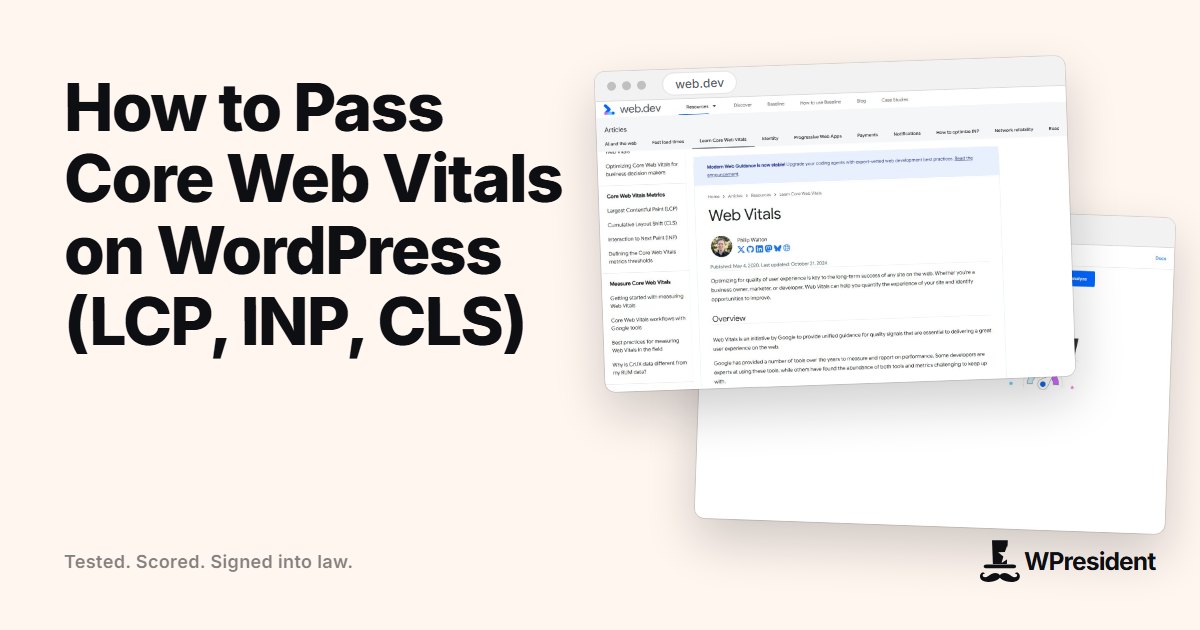
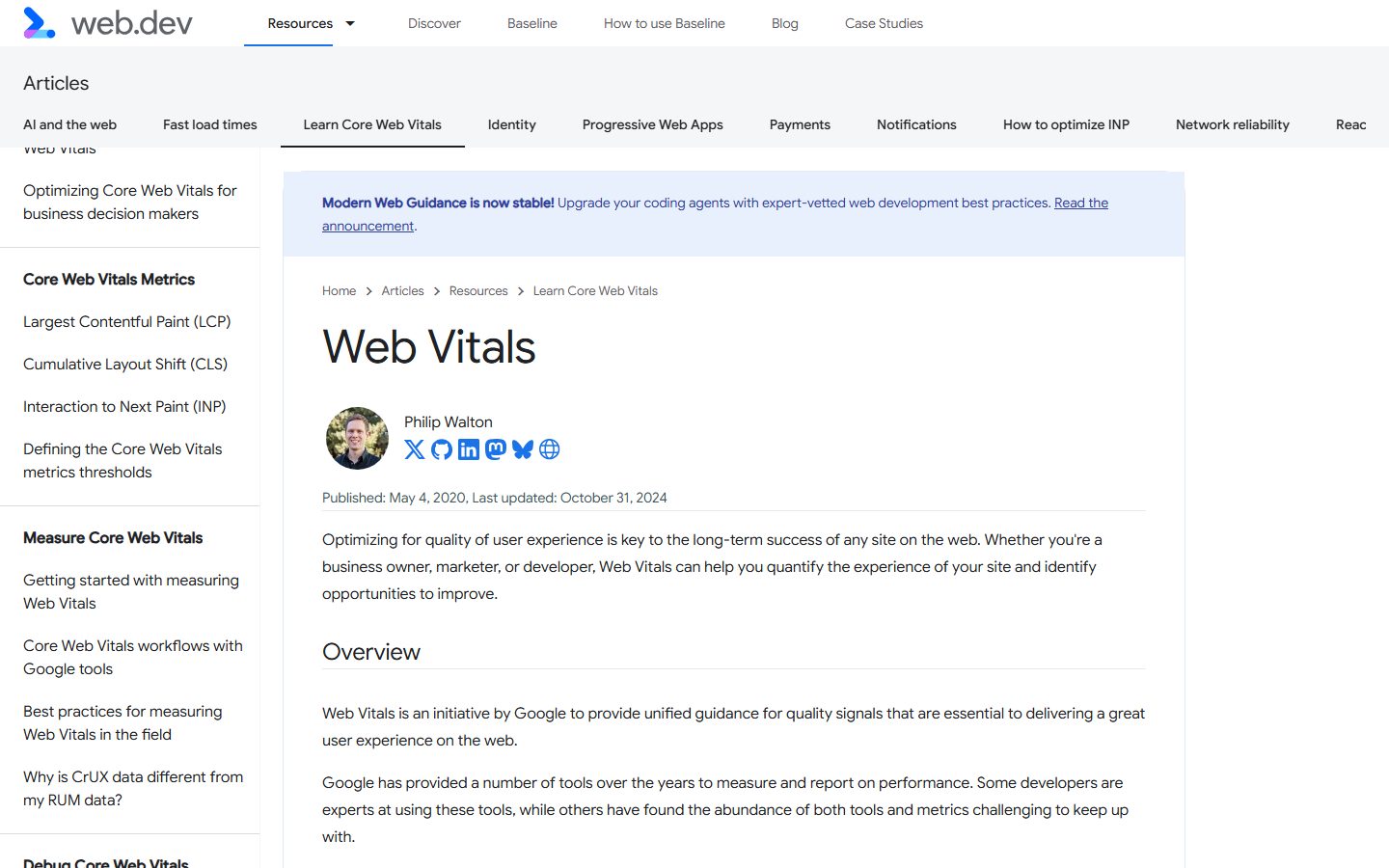
Core Web Vitals are Google’s measures of real-world page experience. They are one of many signals used in search, and more importantly they track things visitors feel: how fast the main content appears, how quickly the page responds, and whether it jumps around while loading.
The three metrics and their targets
| Metric | Measures | Good |
|---|---|---|
| LCP, Largest Contentful Paint | How long the largest visible element takes to appear | 2.5 seconds or less |
| INP, Interaction to Next Paint | How quickly the page responds to taps, clicks and key presses | 200 milliseconds or less |
| CLS, Cumulative Layout Shift | How much the layout moves unexpectedly | 0.1 or less |
Google assesses these at the 75th percentile of real visits, so you pass when most of your visitors have a good experience, not only a fast lab test.
Measure first
- Search Console shows Core Web Vitals for groups of URLs, based on real user data.
- PageSpeed Insights shows field data for a URL when available, plus a lab test with specific recommendations.
- Chrome DevTools and Lighthouse help you reproduce and debug issues.
Fixing LCP
- Find the LCP element. It is often a hero image or a large heading.
- Serve the hero image efficiently: correct size, modern format, no lazy loading on that image, and a high fetch priority.
- Improve server response. Page caching and quality hosting cut the time to first byte.
- Remove render-blocking CSS and JavaScript that delays the first paint.
- Preload critical fonts and avoid loading many font weights.
Fixing INP
- Reduce JavaScript. Remove plugins and third-party scripts you do not need.
- Delay non-essential scripts such as chat widgets and some trackers until after interaction.
- Avoid heavy work on click, such as large DOM updates and expensive event handlers.
- Test on a mid-range phone, not just a fast desktop.
Fixing CLS
- Set width and height on every image and video so the browser reserves space.
- Reserve space for ads, embeds and banners, including cookie notices.
- Use
font-display: swapand similar sized fallback fonts to limit text jumps. - Do not inject content above existing content after load.
WordPress-specific tips
- Use a lightweight theme or block-based layout and avoid stacking several page builders.
- Use one caching approach, ideally at the server level, rather than several plugins.
- Check the Network tab for plugins loading scripts and styles on pages that do not need them.
- Use a CDN for static files if your visitors are far from your server.
Final thoughts
Treat Core Web Vitals as a way to find real problems. Fix the largest, most visible issue on your most important pages first, measure again, and repeat.
Frequently asked questions
Do Core Web Vitals affect SEO?
They are a ranking signal among many. Content relevance matters more, but a poor experience can cost you visitors and conversions regardless of rankings.
Why is my lab score good but field data poor?
Lab tests use a single device and network. Field data reflects real visitors with slower devices and connections, which is the data that counts.